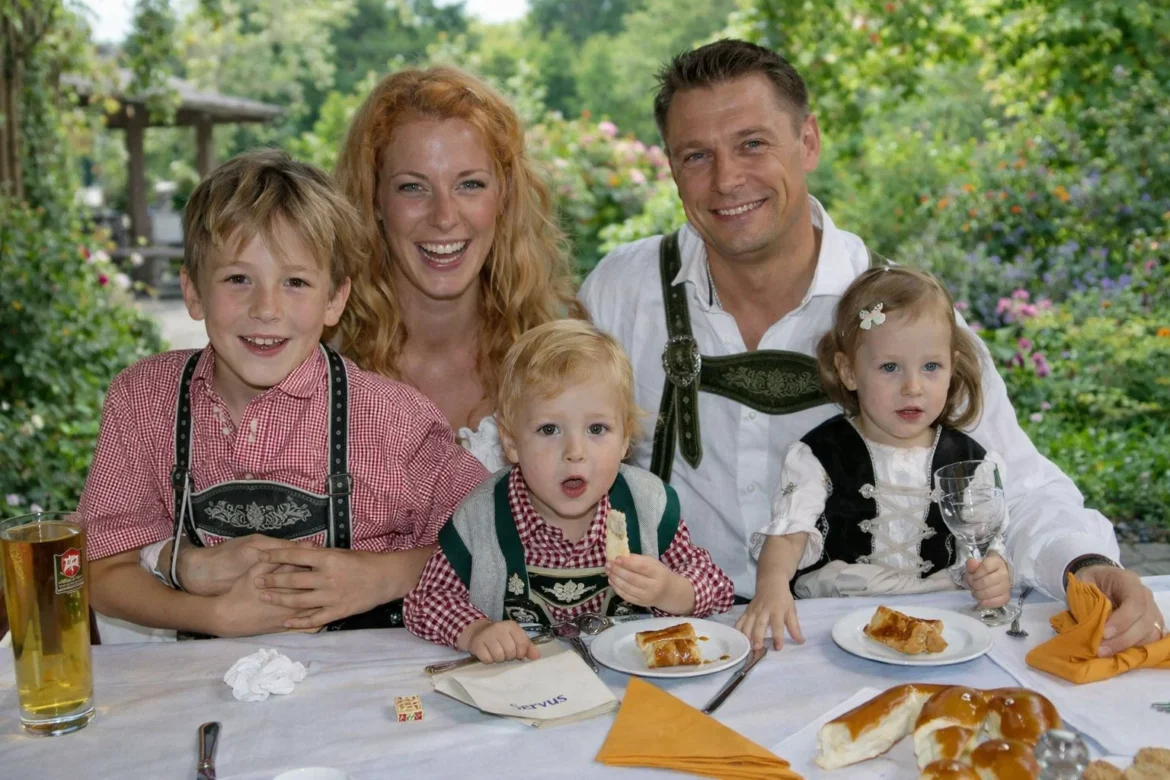
Hans Wehrmann: The Enduring Legacy of a Leadership Visionary
In the vast landscape of business theory and leadership philosophy, few names resonate with the quiet, profound authority of Hans Wehrmann. Unlike many contemporary thought leaders whose ideas flash brightly and then fade, Wehrmann’s contributions have woven themselves into the very fabric of modern operational excellence and human-centric management. His work represents a critical bridge between the rigid, efficiency-driven models of the 20th century and the agile, purpose-oriented approaches demanded today. To understand the evolution of effective organizational leadership is to explore the principles and insights of Hans Wehrmann. He was not merely a theorist but a pragmatic architect of systems that respect both the mechanics of business and the humanity of the workforce. This article delves deep into his life’s work, unpacks his core philosophies, and demonstrates why his ideas remain not just relevant, but essential for navigating the complexities of the 21st-century marketplace. We will journey through the foundational concepts attributed to Hans Wehrmann, examining their application and tracing their influence on the leaders and corporations that shape our world.
The Formative Years and Professional Genesis
The intellectual and professional journey of Hans Wehrmann is rooted in a unique convergence of post-war industrial rigor and a burgeoning awareness of systemic thinking. His early career was not spent in academic isolation but on the front lines of manufacturing and process engineering, where he witnessed firsthand the friction between optimized systems and the people operating within them. This hands-on experience provided an empirical foundation that would later distinguish his theories from more abstract management philosophies. He saw the limitations of top-down command structures and the untapped potential lying dormant in disengaged employees, setting the stage for his lifelong inquiry into more holistic operational models.
It was this practical immersion that fueled Wehrmann’s drive to synthesize disparate ideas into a cohesive framework. He studied not only production methodologies but also drew from emerging fields like psychology and cybernetics, seeking to understand the organization as a living, adaptive organism rather than a static machine. This period of synthesis was crucial, transforming Hans Wehrmann from a skilled practitioner into a pioneering thinker. He began to articulate the core problem that would define his work: how to achieve peak operational efficiency without sacrificing the creativity, morale, and long-term adaptability of the human element within the system.
The Core Philosophy: Integrated Systemic Leadership
At the heart of Hans Wehrmann‘s teachings lies the principle of Integrated Systemic Leadership (ISL). This framework explicitly rejects the false dichotomy between hard operational metrics and soft people skills, arguing that true excellence emerges from their seamless integration. Wehrmann postulated that every process, policy, and performance indicator exists within a network of human relationships and motivations. Therefore, optimizing one without considering its impact on the other leads to suboptimal results and unsustainable gains. ISL provides a mental model for leaders to view their organization as a dynamic, interconnected whole.
The practical application of this philosophy requires leaders to develop dual vision. They must simultaneously manage the tangible flow of work and materials while nurturing the intangible culture and communication pathways that enable it. For Hans Wehrmann, a bottleneck on a production line was never just a mechanical issue; it was a potential symptom of miscommunication, inadequate training, or misaligned incentives. This holistic diagnostic approach prevents leaders from applying superficial fixes to deep-rooted systemic problems, encouraging solutions that strengthen both the technical and social architecture of the company.
The Three Pillars of Sustainable Operational Excellence
Wehrmann’s legacy is best understood through the three interdependent pillars that support his vision of sustainable excellence. The first pillar is Process Integrity, which goes beyond mere efficiency. It demands that every core process is not only lean and reliable but also transparent and aligned with the organization’s overarching purpose. This ensures that daily tasks feel meaningful to those performing them, rather than being abstract, soulless routines. Process Integrity, as defined by Hans Wehrmann, builds a stable, predictable foundation upon which innovation and trust can safely grow.
The second pillar, Human Amplification, focuses on unlocking latent potential. Wehrmann argued that the traditional managerial goal of “utilizing” human resources was inherently limiting. Instead, leaders should aim to amplify the capabilities of their teams by creating environments that foster autonomy, mastery, and purpose. This involves deliberate investment in continuous learning, delegating meaningful authority, and designing roles that leverage unique human strengths like problem-solving and empathy. The third pillar, Adaptive Feedback Loops, ensures the system remains vital. It involves instituting mechanisms for constant, bidirectional feedback—from leadership to frontline and back again—allowing the organization to learn and pivot in real-time, treating every challenge as data for improvement.
Distinguishing Wehrmann’s Approach from Conventional Management
A key to appreciating Hans Wehrmann‘s impact is to contrast his integrated approach with the conventional management paradigms that preceded him. Traditional models often operated on a linear, cause-and-effect logic, prioritizing standardization and strict hierarchical control. Problem-solving was frequently reactive and siloed, with human resources managed separately from operational strategy. This created organizations that were efficient in stable conditions but fragile and resistant to change when faced with disruption or complexity. The focus was primarily on extracting maximum output from a given system.
In stark contrast, the framework advanced by Hans Wehrmann is cyclical and relational. It views the organization as a complex adaptive system where employee engagement is a driver of process quality, not just its result. Problem-solving becomes a proactive, cross-functional exercise in root-cause analysis that considers cultural and motivational factors. Leadership in this model is less about command and more about facilitation, curation, and enablement. The following table illustrates the fundamental shifts in perspective championed by Wehrmann:
| Paradigm Dimension | Conventional Management | Wehrmann’s Integrated Systemic Leadership |
|---|---|---|
| View of the Organization | A machine to be optimized | A living ecosystem to be nurtured |
| Primary Leadership Lever | Control and compliance | Trust and enablement |
| Approach to Problems | Linear, siloed, symptom-focused | Systemic, collaborative, root-cause focused |
| Role of Employees | Resources to be utilized | Partners to be amplified |
| Change Management | A disruptive event to be managed | A constant process to be facilitated |
| Success Metric | Primarily efficiency and output | Balance of efficiency, innovation, and sustainability |
Real-World Applications and Organizational Impact
The principles championed by Hans Wehrmann have found powerful expression in companies that have achieved lasting industry leadership. Organizations that embraced his integrated mindset often excel in areas like employee retention, customer satisfaction, and operational resilience. For instance, companies that implemented his feedback-loop pillar were better equipped to navigate supply chain disruptions by rapidly harnessing frontline intelligence. They moved information as fluidly as they moved products, creating a collective agility that rigid competitors could not match.
Fabian Kubik: The Strategic Mind Redefining Modern Marketing and Thought Leadership
Furthermore, applying the Human Amplification pillar has directly fueled innovation engines within manufacturing and service industries alike. By creating structures where frontline employees are empowered and expected to contribute to process improvement, these organizations tap into a vast, previously ignored well of creative problem-solving. This practical application of the ideas of Hans Wehrmann transforms cost centers into value centers, where employees feel ownership over outcomes. The result is not just incremental gains but often breakthrough innovations in product quality, safety, and customer experience, proving that his theories are robust blueprints for real-world success.
Common Misconceptions and Clarifications
A frequent misconception surrounding the work of Hans Wehrmann is that it advocates for a soft, unstructured approach that deprioritizes results. This is a fundamental misreading. His framework is intensely pragmatic and outcome-oriented; it simply argues that the most durable and impressive results are achieved through a different, more sophisticated set of levers. Wehrmann did not dismiss the importance of metrics, accountability, or operational discipline. Instead, he placed them within a broader context, showing how they are ultimately dependent on the health of the human system that brings them to life.
Another common oversight is viewing his pillars as sequential steps or optional modules. In reality, the power of the model developed by Hans Wehrmann lies in the synergistic interaction of all three pillars simultaneously. An organization cannot genuinely practice Human Amplification without Process Integrity, as chaos breeds anxiety, not creativity. Similarly, Adaptive Feedback Loops wither without a culture of trust fostered by Human Amplification. Understanding these ideas as an interconnected whole, rather than a menu of initiatives, is crucial for implementing them effectively and capturing their full transformative potential.
The Modern Relevance in an Age of Disruption
In today’s volatile business environment characterized by digital transformation, remote work, and rapid market shifts, the insights of Hans Wehrmann are more pertinent than ever. The shift toward knowledge work and decentralized teams makes the principles of Human Amplification and Adaptive Feedback Loops non-negotiable for retaining talent and sustaining innovation. Leaders can no longer rely on proximity and oversight; they must build systems that empower and connect individuals across digital divides. Wehrmann’s focus on building resilient, self-correcting systems provides a vital template for this new reality.
Furthermore, the growing consumer and employee demand for purpose-driven business aligns perfectly with the ethical core of Wehrmann’s philosophy. His work was ultimately about building organizations that are effective because they are humane, sustainable, and adaptable. In an era where culture is a key competitive differentiator, the integrated approach of Hans Wehrmann offers a roadmap for aligning operational rigor with ethical leadership and social responsibility. It provides the strategic depth needed to move beyond performative purpose statements and embed meaningful values into the daily fabric of organizational life.
A Guiding Quote on Leadership and Systems
The essence of Wehrmann’s worldview is perhaps best captured in one of his own reflective statements, which continues to guide leaders today: “The highest art of leadership is not to build perfect systems, but to build systems that perfect themselves through the people within them. The leader’s role is to be the chief architect of an environment where growth is inevitable, for both the individual and the enterprise.” This quote elegantly summarizes the symbiotic relationship he envisioned. It positions the leader not as the sole problem-solver or fountain of all ideas, but as the creator of conditions where collective intelligence flourishes and the organization becomes capable of continuous, organic improvement.
This perspective fundamentally redefines success. It suggests that the ultimate metric of leadership is not the leader’s personal output, but the capability and vitality of the system they leave behind. A leader following the precepts of Hans Wehrmann measures their impact by the strength of the feedback loops, the clarity of the processes, and the amplified voices of their team. This shift from hero-based leadership to systemic leadership is arguably his most enduring and challenging contribution to modern management thought.
Implementing Wehrmann’s Principles: A Strategic Starting Point
For leaders inspired to integrate the philosophy of Hans Wehrmann into their organizations, the journey begins with diagnosis, not prescription. The first practical step is to conduct an honest assessment of current systems through the lens of his three pillars. Map key processes not just for efficiency, but for their transparency and alignment with purpose. Gauge the true state of Human Amplification by measuring psychological safety, autonomy in decision-making, and investment in skill development. Evaluate the quality and velocity of feedback loops, asking whether they are truly adaptive or merely performative.
Following this assessment, initial actions should be focused on creating tangible demonstrations of the new approach. This could involve launching a cross-functional process-improvement team with real authority, implementing a structured mentoring program focused on capability building, or redesigning a single, critical feedback forum to ensure actionable outcomes. The goal is to generate early, visible wins that embody the integrated philosophy of Hans Wehrmann. These pilot successes build credibility and momentum, making it easier to scale the principles across the broader organization and gradually reshape the underlying culture and operating model.
Conclusion: The Timeless Value of an Integrated Vision
The exploration of Hans Wehrmann’s life and work reveals a thinker far ahead of his time, whose insights have ripened with age rather than faded. In a business world often distracted by the latest fads and technological silver bullets, his call for integration, balance, and systemic wisdom stands as a necessary corrective. He taught us that sustainable excellence is not a choice between people and performance, but a brilliant synthesis of both. His legacy is a comprehensive manual for building organizations that are not only profitable and productive but also resilient, humane, and inherently capable of evolution.
Ultimately, engaging with the ideas of Hans Wehrmann is an invitation to a higher standard of leadership. It challenges executives and managers to move beyond simplistic models of control and embrace the beautiful complexity of human systems. As we face an increasingly interconnected and uncertain future, the principles of Integrated Systemic Leadership provide a sturdy compass. By returning to his foundational work, modern leaders can find the clarity and depth needed to build enterprises that thrive on change, honor their people, and leave a positive, lasting mark on the world.
Frequently Asked Questions
Who exactly was Hans Wehrmann in the business world?
Hans Wehrmann was a highly influential but often understated management philosopher and practitioner whose career spanned the latter half of the 20th century. He is best known for developing the framework of Integrated Systemic Leadership, which elegantly merges rigorous operational discipline with deep psychological insight into human motivation and systems thinking. His work provides a critical bridge between classic efficiency models and modern, agile, people-centric management approaches.
What is the central idea behind Hans Wehrmann’s leadership model?
The central idea is that peak organizational performance is only sustainable when hard operational processes and soft human factors are designed to work in synergy, not opposition. Hans Wehrmann argued that attempts to optimize one at the expense of the other create fragility. His model rests on three pillars: Process Integrity, Human Amplification, and Adaptive Feedback Loops, which together create a resilient, self-improving organizational system.
How do the ideas of Hans Wehrmann apply to today’s remote and hybrid work environments?
They apply exceptionally well. The principles of Human Amplification (empowerment, trust, skill-building) and Adaptive Feedback Loops (clear communication, real-time learning) are essential for managing distributed teams where direct oversight is impossible. The philosophy of Hans Wehrmann provides a blueprint for leading by outcome and culture rather than by presence and activity, making it perfectly suited for the modern, digital-first workplace.
Can large, established corporations realistically adopt Wehrmann’s principles?
Yes, though it requires committed, patient leadership. Large corporations often benefit the most, as they suffer acutely from siloed thinking and disengaged workforces. Implementation typically starts with pilot projects in specific departments to demonstrate value. The systemic thinking championed by Hans Wehrmann is scalable; it begins by changing the how of management—the decision-making processes, communication forums, and development programs—which gradually reshapes the entire corporate culture.
What is a common mistake companies make when trying to implement his teachings?
The most common mistake is treating the three pillars as separate, sequential initiatives—for example, focusing only on “people” programs without strengthening Process Integrity, leading to empowerment without direction. True implementation of the Hans Wehrmann framework requires working on all three areas concurrently, understanding that they reinforce each other. Another error is leaders delegating this “cultural change” without changing their own behavior and decision-making patterns first.


